
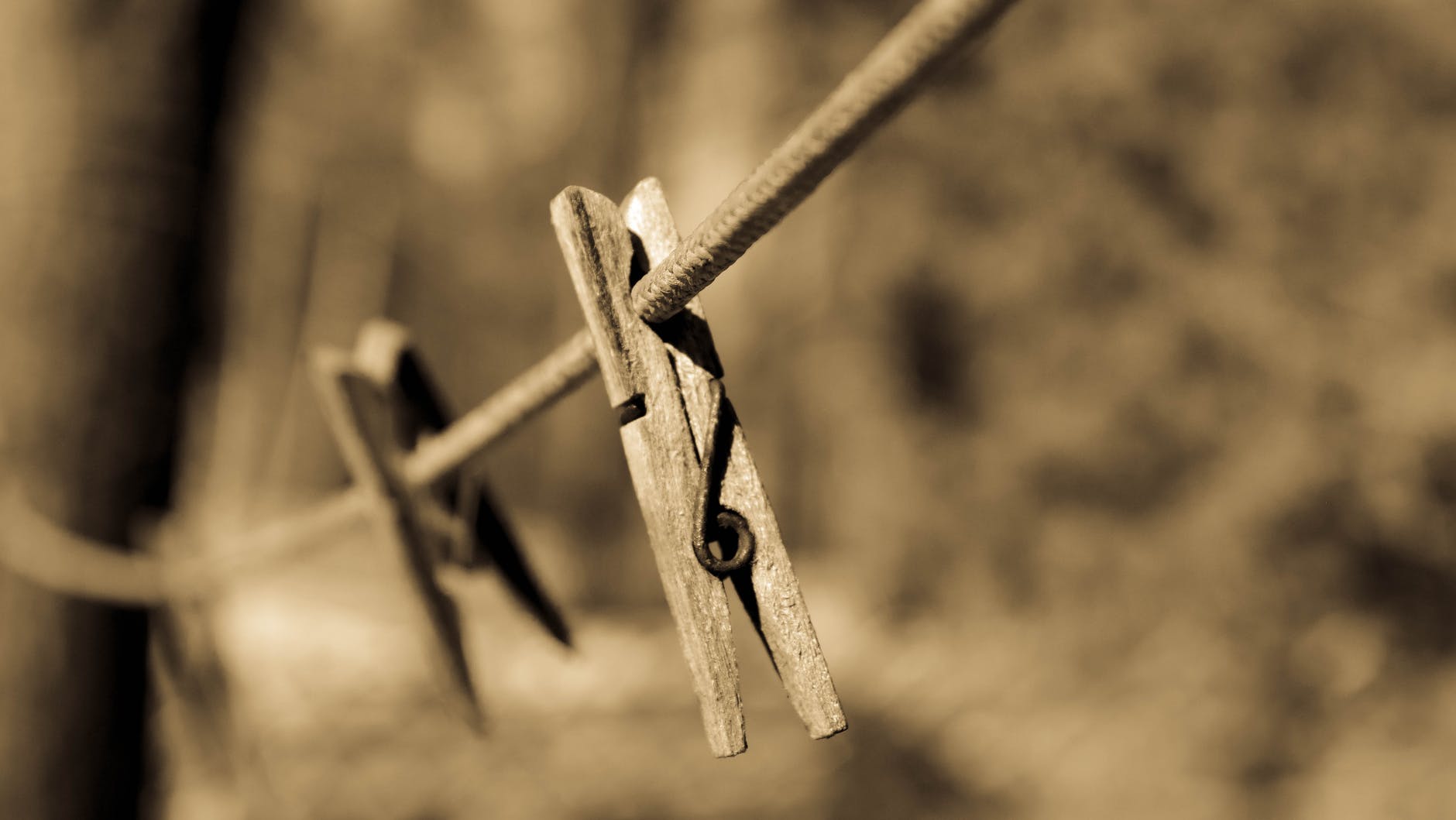
I’m in the process of purchasing a new clothes line. Just that word ‘clothes line’ conjures childhood memories of washing flapping in the breeze, swinging in circles on our backyard Hills Hoist. Nappies. Uniforms. And hundreds of pegs.
Our clothes line was permanently crooked. I don’t remember it any other way. Although my mum probably did – in those quietly organised days, pre-children. What became the lowest arm of our clothesline was the easiest to jump to and hang from. As we all got older and heavier, the circle of dirt, ploughed by dragging feet into Dad’s already struggling ‘lawn’, became more defined. Sibling toddlers and pre-schoolers would be attached and spun alongside undies and bras and faded t-shirts. Mum’s cries and fervent knocking on the kitchen window would go ignored. And eventually the line was abandoned for more thrilling play equipment, like that shaky hand-made ladder that reached to the uppermost branch of our huge gum tree.
The Hills Hoist went into production in Adelaide in the mid 1940s and has now reached ‘icon’ status throughout the country. It is officially listed as a National Treasure by the National Library of Australia.
But what happened to its place alongside the likes of the family Kingswood and orange-patterned wallpaper? Backyards became smaller (or in some cases, houses became bigger). In an environment where owning your own patch of soil became a mark of familial status, land became subdivided and the yard became a ‘garden’ or ‘courtyard’. Backyard entertaining, with a deck, BBQ and outdoor setting, and minus a view of hanging jocks and socks, became the fashion. Clothes dryers also prevailed and, with other white goods, were soon standard timesaving inventions to support a household’s busy weekend or lifestyle.
I remember, not so long ago, stumbling upon a discarded Hoist on a walk to my local supermarket. It was on a footpath alongside piles of pre-loved household items in readiness for hard rubbish collection. I wondered what had replaced the steel structure in their yard. When I walked past on my return, the majority of re-useable items had been salvaged by scavenging bargain hunters – except the historical object.
I know, I reminisce. Maybe it’s part of getting older. Maybe it’s part of sitting still and taking a moment. The word ‘nostalgia’ comes from the Greek word ‘nostos’ for homecoming and ‘algos’ for pain. And yes, there is a certain sadness for things that are no longer. But nostalgia is a shared memory. A connecting to place and remembered stories and happy times. It is looking back, but also informs our looking forward with hopefulness and a smile.
If you have a moment – take a look at this short BBC doco – BBC reel – The Benefits of Being Nostalgic.
 letterassembly.com
Thank you for this post. It helped me understand the feelings I’m having during this pandemic.
LikeLike