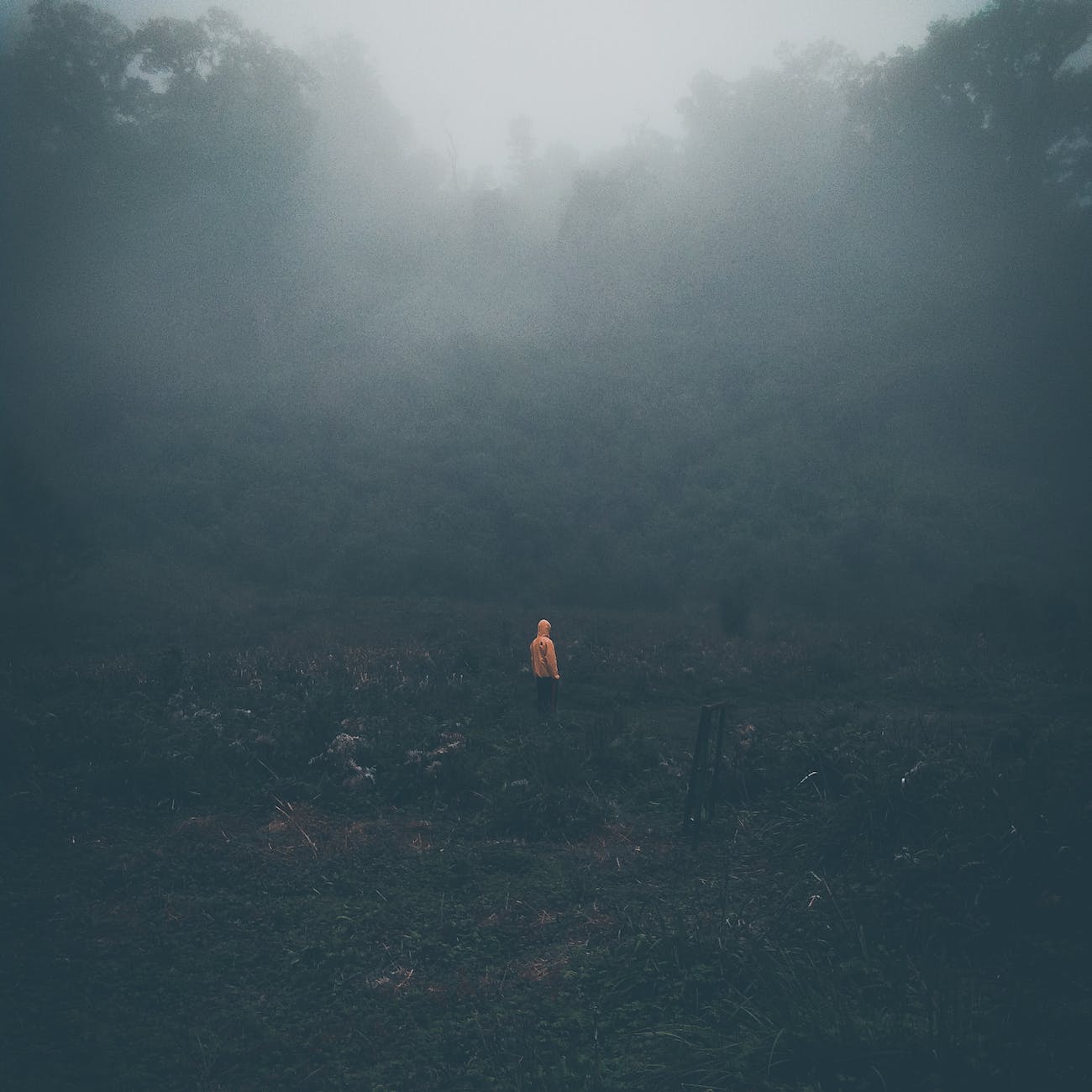

Nature will have her way.

Photo by Paul IJsendoorn on Pexels.com

Nature can be tempered, controlled and used to great advantage or negative impact. But, deep down we know that nature will ultimately just do what she does.

I’m waging an internal war with the tree next door. It flicks its tiny leaves like confetti into our yard. Confetti that gets between your toes and into that crease in your elbow and onto your hair. The leaves land in our pool and cover the surface like abstract art. Except that it isn’t.

We took to that tree like excited hairdressers a year ago. Well, the aborists did. They spent hours cutting back the heavy branches that were reaching over into our space. The tree is huge. A monster tree that is older than our pool and probably older than me. It reaches into the sky and over our fence and into the sky above our pool.

Yes, I did feel like a nature-hating, non-tree hugging, mean person. But trimming branches wasn’t going to hurt anyone. And for a while we enjoyed not having to clean our pool and yard as often. And there was more sunlight, for a bit.

Then the branches grew back and fast.

I’m still waging my war, but I can’t go through all of that chopping and calming the neighbour and paying a lot of money again. I have decided to turn my pool and pavement cleaning into furious exercise. I read somewhere that housework burns calories and I’m not talking the flick with a feather duster kind of housework. After I’ve swept and grunted and swept and scooped, the pool and yard look good – until the next couple of days when the hundreds and thousands float down from the sky.

Having said all of this, I’m grateful there’s not an apartment block next door or as Joni Mitchell so beautifully sung, they haven’t ‘paved paradise and put up a parking lot’…. Not yet anyway.

Nature will have her way. And even though generations upon generations haven’t often been thoughtful or kind or considerate to her, she finds a way through. For now.

Most of us won’t know what we’ve got until it’s gone.
That Profound Sky

Photo by Pixabay on Pexels.com

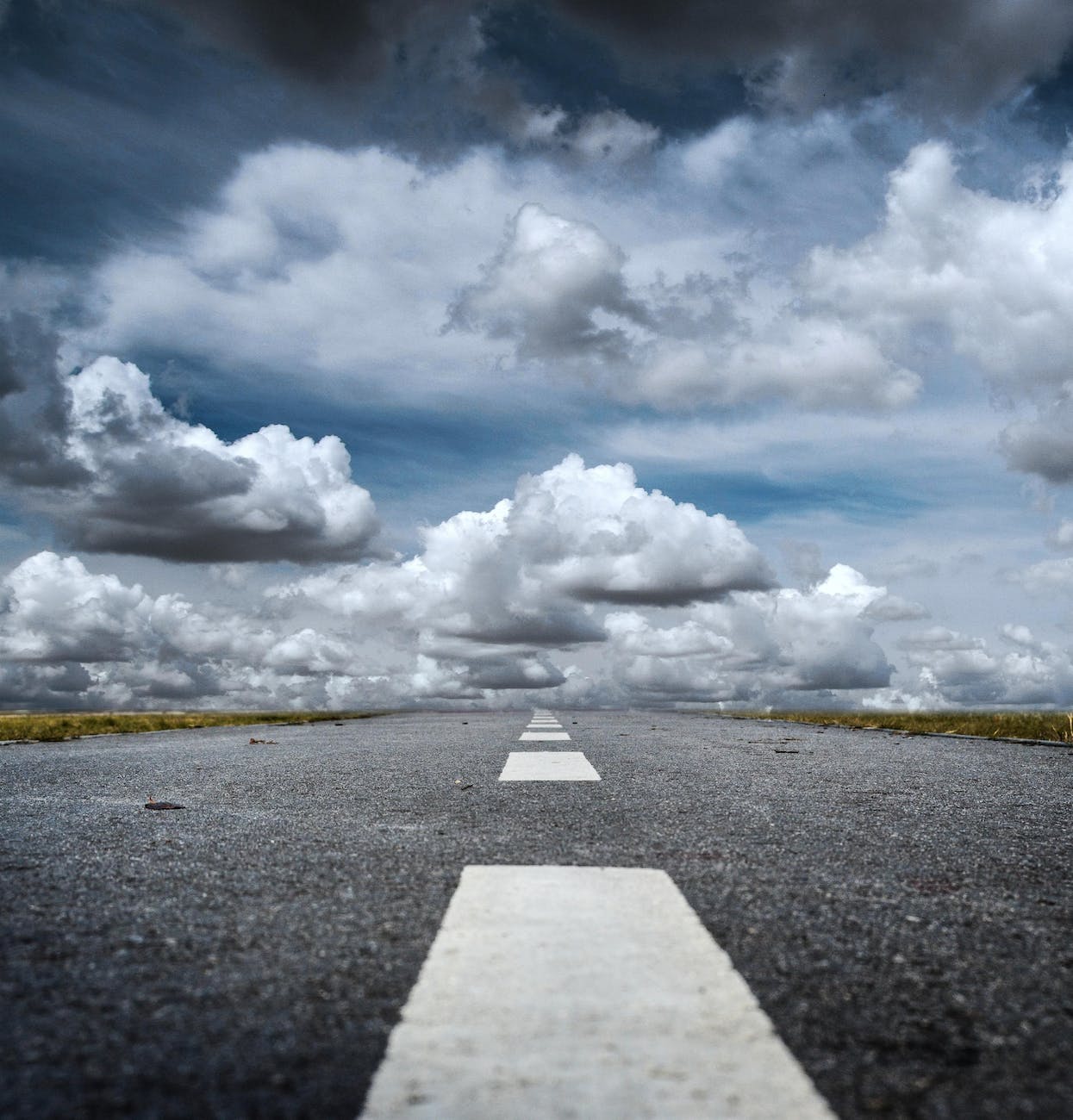
I’ve been on and off planes a bit lately. The magic of flight and blur of time as we cross kilometres of green, brown, populated, sparce and complex earth. A land dotted with trees and storylines. I sometimes gaze down through lumpy shape-shifting clouds – when I have the window seat, that is.

I now have a small ritual that not only takes my mind off the ridiculous notion that such a heavy machine can lift that many people (and their carry-ons) into the sky, but also passes the time. While I can’t read or write in motion, I can listen and dream. (And airline food tastes better when your mind is somewhere else).

Just after the safety demonstration, on go my headphones that cover my earlobes and swallow my earrings. I flick through the saved Spotify lists on my phone and open my favourite poetry podcast.

Poetry is at times moving, exciting, deeply-connecting and ephemeral. Add that to its place in my ears high above the earth and it’s a profound sky I’m in.

When my boss flies, on the other hand, she opens her laptop and constructs emails, writes documents and is very productive – in a work sense, that is. She relishes the undisturbed time where kids can’t text her from the next room or demanding emails pop onto her screen.

I watch others navigate young ones who don’t want to sit still, negotiate elbow space on ever-shrinking arm rests, nestle against a partner’s shoulder (I assume partner, not stranger), and note TV shows and books that some disappear into. A microcosm of lives, beliefs and mindsets caught in this ‘bucket of bolts’ (as I heard a pilot once say).

In that Spotify space where I set my song list on random, is the great re-setting, re-winding, re-creating and re-visiting of ideas and thoughts previously stored away. Where time is lost but moments are found.

And far beneath us, through the potholes of light, lie the tangled branches of humanity – toiling, living, waiting, agonising, loving, connecting, fighting, singing, crying and laughing.

And it’s here I mindlessly (yet mindfully) find myself above them – in that profound sky.

Isolated – in a good way

Photo by Gagaz Adam on Pexels.com

Let’s do something, we both agreed. And in the doing of something we ended up doing almost nothing.

My partner and I have stopped speaking with each other. Not due to animosity or pettiness or lack of anything to say, but because of this place.

We’re camping off-grid. But, you know, we’re very much part of the grid. The grid of nature. The interlocking patterns of the robust and magnificent Milky Way we marvelled at last night as we lay on huge, surprisingly warm, boulders after our posh camp dinner. The interlocking and enmeshed sounds of birds communicating with one another in a morning sky so still and silent that I can hear a leaf fall to the ground. I’m not talking about a heavy palm frond crashing to earth, but a thin, elegant gum leaf fluttering and spinning as it gently and carefully lands.

We don’t need to speak.

I haven’t had mobile reception for four days – by choice that is, not because my ancient eight-year-old phone has finally died. Aside from some initial worry about missing a possible untimely family member’s death or god forbid, an unpaid bill reminder, I’ve eased into a news-free, information-free, trash-free zone.

There’s no one here. Just us.

I thought I’d be more anxious about isolation. Not government enforced isolation, but rather, feelings of remoteness that growing up in a small country town might bring, FOMO, lack of options and, to some extent, boredom. But here, now, in this place out of touch with everything I’ve known until this point and yet more in touch with light, shape, colour and sound (oh, and taste – can’t forget that posh camp dinner), I’m not isolated, I’m centred, calm and feeling strong.

Doing nothing is actually doing a lot.

How to run away from your problems.

Photo by Admiral General M. on Pexels.com

In my case, literally running away became a solution. Running. Yes, running. That’s something that other people do. Some of my friends, who are the busiest people I know, find time and energy to run. I always thought that that was for them. Why run when you can stroll? Why get puffed when you can sigh? I always thought that there would be too many bits of skin that would continue to move after I had stopped. Momentum can be a frightening thing.

One night languishing in bed, after eating too much and lounging in front of the TV for too long, I started researching physical activities for women of a certain age. (And you know I’m not talking about teenagers here). You see, lack of time is not an issue for me. I have heaps up my sleeve in the period of a day or week. Mostly, when not working, I used it up daydreaming or watching mindless TV. A wasted life, you might think. Then I discovered the joys of riding my bike. But I needed something else as well. More rigour. More heart pounding stuff.

I kept stumbling upon the option of running. How it wasn’t just for the young and restless. All I had to do was put one foot in front of the other. So I decided that not having properly fitted running shoes wouldn’t deter me. I decided that having end of year celebrations, parties and family gatherings wouldn’t be a reason not to start. I decided that not having any training or warm up wouldn’t stop me either. I ran a couple of blocks initially and realised that my body didn’t keep moving after I had stopped, my heart seemed OK with it and my breathing found its own rhythm. I realised that I could and it’s all good. I’ve since been fortunate enough to get some real running shoes (what a magnificent difference to my feet) and I’ve signed up for a fun run. And it actually might be fun too!

Running is now part of my routine and running away from my problems has been the best solution. That’s not to say that I no longer have problems, but I think that might be a topic for another blog.

Why friendliness is like blue tack.

Photo by Anna Nekrashevich on Pexels.com

Blue tack. Genius invention. Attaches things, brings things together. Is open to change, movement and shape-shifting. Commits just as long as it’s needed and then can move on to be re-used somewhere else. Allows beauty to be displayed, lists to remind, rock posters to inspire, and gaps to fill. And when you’re ready to pick up your life and move on, it can come with you. It’s not too expensive either.

Friendliness is just like that. Warm and pliable. Handy and useful. Brings things to the fore in a good way.

One of my students was a travelling Japanese woman in her late 60s. She’d arrived in Australia on a great late adventure. Her first time outside of Japan and one of few times outside her own little village. I got the blue tack out to attach a map of the world to the wall, so the students could show each other where they’d come from. She was less interested in the map than the blue tack. Fascinated in fact. I bought her some to take back to Japan, sure that she’d find it (or its equivalent form) somewhere near her place. She was very excited with this new discovery.

I digress. Except to note that blue tack, like friendliness, can be passed on, shared, and used again and again. And even its pale blue colour is calming.

I’ve got people in my life like that. Pliable, reassuring and problem-solvers. Some of them set the standard for friendliness and kindness. They reach out to people and make them feel included and welcome. They show me how it’s possible to do this effortlessly and without commitment. They show me that it’s actually more important than turning away or keeping quiet. I’m really proud to know them and aspire to be more like that.

So now, I just need to get my own packet of blue tack and start using it. Not just for myself but for others too.

To speak up or look away

Photo by Laker on Pexels.com

I’m not talking major global issues or humanitarian problems here but the ability of some people to comment and warn rather than walk past or turn away. The ability to put themselves in another’s shoes (without trying them on, so to speak).

One of the first questions I asked my partner at our first date (back when dating was not a dirty or loaded word) was “are you the kind of person who will tell me if I’ve got spinach on my teeth?”

“Of course,” he answered and despite many tests over the years, he still is.

It takes a certain type of person to speak up to protect someone from embarrassment (in a non-judgie way).

My girlfriends will always tell me if there’s anything hanging off my face or if my clothing isn’t hanging right. Is that because they are my friends or because they are that certain type of person? I think it’s the latter. They also have the confidence to make the call.

A friend tells me a funny story about when she was sitting at a high-level UN meeting with Ministers and Representatives from many countries around the world, and not long into this meeting, her colleague leaned in and said “I think your shirt might be on inside-out.” It was. And she was embarrassed but grateful.

On one of my days off many years ago, I started the morning in a cafe reading the newspaper (back when there was ink involved opposed to a screen). After that I walked around the streets window shopping at quite a few places before deciding that I actually wanted to try something on. As I stood in front of the change-room mirror, I was horrified to see black lines smudged across my cheeks. Like camo make-up. No doubt the result of wiping my inky newspaper fingers across my face four hours previously. No one had said anything, not even a quizzical look. I had been walking around all morning with black stripes on my face. And nothing! Maybe they were being polite and non-judgemental. Maybe they thought it was an artistic or political statement. Maybe they just weren’t brave enough.

Only this week, as I was about to walk out of the ladies bathroom at a shopping centre, a woman approached me with “excuse me, but your skirt is tucked in at the back.” She meant, of course, that my skirt was tucked into my undies, but she was way classier than that. I was very grateful. She was definitely that type of person.

Is it about standards and trying to make people feel less than perfect? I think not. I really do think it’s about empathy. There’s a braveness too, in that the subject might turn around and say “I know! I like it like that. Don’t be so judgemental.”

I tapped a woman quietly on the shoulder at a pedestrian crossing once to let her know that her skirt zipper was down. Would I say the same, however, if it was a guy with his zipper down?

Maybe I’m not that empathetic or brave after all. Thankfully some people are.

Why it’s on-trend to be off-trend

Photo by Magda Ehlers on Pexels.com

Off-trend is not out-dated. Off-trend is a conscious decision to dismiss what is fashionable.

Forbes.com reported in February that Facebook lost approximately 500,000 daily users in the last three months of 2021.

I’ve never had a Facebook page. Never. I’m not suggesting that Facebook is a fad – but it is possible to live without it. ‘How can you stay in touch with people, especially those who are far away?’ My friends defend their attachment. ‘I just call them or text them or eventually make time to see them’, I answer. You might argue that Facebook is no longer a trend, it’s just normal.

I’ve made choices during my life to eschew certain trends or fads (as I saw them) and I’m pretty sure I’ve not suffered as a result. Except maybe at a Quiz Night where I can’t answer those questions about certain songs or movies or historical crazes.

Maybe I can’t be part of the whole conversation – but I can create my own. And in any case, I’m surrounded by people who are interested in more than just the latest thing. Yes, I don’t know the top 10 songs, or wear what everyone is wearing, or carry what everyone is carrying, or use words and terms that are of the moment or watch everything on the box everyone is talking about . Does that make me old? Out of touch? Fade into the background? Insignificant?

I bumped into a friend of a friend recently, she asked me for my number and was delighted and slightly surprised when I pulled out a piece of paper from my bag and wrote it down (instead of sending it straight to her phone). She was so taken by my gesture, that she took a photo of the scrap of paper and asked whether she could send it to her friends (removing my identity of course) to show them how I had exchanged my number with her. Off-trend. Old-fashioned. Perhaps, I’m just post-trend instead of off-trend.

Off-trend is not about trail-blazing or replacing something with a cooler version. It’s about not leaping at shadows. It’s about stopping rather than pursuing. It’s about looking around rather than over your shoulder. The speed at which fashion moves is faster than it’s ever been. Keeping up requires a lack of commitment and/or a short attention span and some of us don’t want to live that way. More of us don’t want to live that way. Off-trend is now becoming on-trend as we examine our lives with magnifying glasses and apply new perspectives.

My problem is now that off-trend is becoming on-trend, I might have to abandon it.

The space between the compliments

Photo by Paula Schmidt on Pexels.com

So here’s the thing about loneliness. It’s the absence, not of friends or companions or family, it’s the absence of drive. And how does drive appear or disappear? It is not gifted or inherited. It’s learned. And the learning is connected to worthiness. Without feeling worthy, there’s no drive. When there’s no drive, there’s loneliness. The overwhelming, overarching ache. Sometimes hard to define.

How can it be possible when, in this privileged place my friend sits, she seems to have no cause. She doesn’t feel worthy. She hears the spaces between the compliments. She wears a darkened lense that distorts.

You can be alone but not lonely. I think she might be both.

We talk and laugh about things and then we go our separate ways. After that she stays still. Not surrounded by calm or contentment, but loneliness. She feels she’s not worthy. As her friend, I try to penetrate the layers and I welcome her peeling of them too. Although we’ve known each other for a long time, she’s protective of her core. As is her prerogative.

So how does she find her drive? Her worthiness?

In the moments. In the tiny moments. The acknowledgement of nature. Just there. The beauty of calm. The decision, right in the present, to smile. The conscious breath, deep intake of nourishing air. The physical movement from one position to another and the very action of pro-action. Today I will. I will, because I’m worthy. I will, because I choose.

Loneliness doesn’t pack away easily. Her bag is already full of experiences both positive and negative. There’s always a place to cram it in – underneath the other stuff. I’m not really spatially-aware, but I can help with the zip.

And maybe sit on the bag to squash it closed.

Just rip off the label (like a band aid)

Photo by Tara Winstead on Pexels.com

I bumped into a friend of a friend recently. She’d not long ago left her job – the human-side of it she’d loved, the politics and paperwork not so much. I asked her about now. What was she doing now (as though she needed to be ‘doing’ something).

‘What do you do?’ and ‘What are you doing?’ – the two primary questions that systematically get placed just after ‘How are you?’ and just before ‘Interesting’. We seek to define and label. It’s how we’re wired to socially interact. It’s how some of us are wired to socially interact. It’s the comfort zone of zones, the clutch of cliches.

She responded that she was going to do some study, that she was interested in community programs and working with people. I immediately sought to label – you mean, Psychology – I asked. And this is what makes her dynamic and uncluttered. She ripped the label off. Just like that. She responded that while she liked the idea of studying the mind and behaviour, she found the theories too scientific, arrogant and self-righteous. That actually, they didn’t seek to truly understand. Lacking relevancy. Not people-focused. Not able to connect.

Part of me wanted to say ‘canons are important’ but then the other part of me wondered if that was just inappropriate and insignificant. We spoke about the importance of the learner and their perspective and needs, and the ongoing trend to learner-focused study. And I agreed with everything she said.

Ripping off the label seemed easy, and not at all painful, with her. I admired her gentle strong confidence to challenge. In the end, she didn’t really have a fixed answer to what she was doing – but that didn’t matter. It was the best answer, because it didn’t answer. And after that, she ripped off the label.

I have no doubt that she’ll continue to rip as she moves through her career or careers. That it won’t be painful, just normal, and that with her warm, joyful manner, the rippee won’t even feel it.

Where the mind will wander

Photo by Johannes Plenio on Pexels.com

Blackout. It’s not just the loss of lighting or communication but memory-related episodes as well. What happens when you blackout or lose consciousness? Where do you go? More importantly, where does your mind wander? So different from the patterns of sleep where dreams might drag you through the realities of the day or to incredible and incredulous fantasies. No, this is something remarkably different. It’s faster, more shocking, without memory and outside of the comfort of lying in bed.

Often seen as a weakness (at the sight of blood or hearing bad news) or part of slapstick comedy in the movies or cartoons, fainting is associated with a dramatic drop in blood pressure – meaning, of course, that the brain is not getting enough oxygen. The body reacts by collapsing and you experience a sudden loss of consciousness and ‘blackout’.

I saw my dad faint once. It was frightening and unexpected. We were on a camping trip to the centre of Australia. Back when ‘air-conditioning’ was opening the car windows at 100kmph and hot vinyl seats stuck to the back of young legs. When ‘sitting in the middle’ meant being in the front bench seat with your parents and the windscreen was forever at risk of being smashed by passing road trains flicking up stones in their wake. The axle broke on our camper trailer and we pulled over to the side of the road. Dad pushed and pulled the trailer in 45+ degree heat while we sat in the shade drawing shapes in the red dirt, too young to physically assist. I looked up just as it happened. Dad dropped to the ground. Quiet. Muscles gone. Mum went to his aid. The drinking water was warm. We watched in shock. I don’t think I knew the word ‘faint’ before then.

I’m a fainter too. Not often, but it has happened a few times. The setting the first time was again a country road. I got out of the car feeling nauseous and ‘car sick’. Dad had stopped so I could throw up outside the car, rather than into my brother’s lap. It was hot and dry. By the time he had come to check on me, I was lying in a pile of rocks near the car. Blackout.

After that time, fainting only occurred when I was really sick and about to vomit. I was usually alone when this happened. I would lower myself to the floor as I felt the light-headedness coming on and then as my mind returned, my cheek would feel the floor beneath it, and for a few seconds I remained a little unsure of where I was as sound and vision were processed. Those moments where I lost consciousness were gone. Nothing to be recalled. They just went. Somewhere.

Most recently, I had a witness to one of my episodes. My partner was wrapping my wrist in a bandage. The injury the result of climbing onto a chair to reach an upper shelf and then staggering and falling when I stepped down.

Crazy but true. Aren’t a lot of household accidents though?

I felt dizzy and nauseous and knew that I was about to faint. And I did. Blackout.

But just before my mind fully returned, it played music. It played but I didn’t hear it. Not through my ears anyway. The music was created by my brain. Then I came to, lying on the concrete floor. My partner provided details about the mysterious movements that occurred when I fainted, the colour change in my face, the limpness of my body, the nervous impulses. But where did my mind go? And where did it find that music? I’m sure that there are medical and scientific explanations for all of this – but I’d prefer to think about the more ephemeral. The phrase ‘lost in thoughts’ is completely about that. The mind not just closing down but wandering. Lost. Somewhere.

The body is a complex thing and the brain even more so. While I’m not afraid of the blackouts, I don’t really want to go there again. I’d prefer to have a daydream and have my mind return unscathed and inspired, not empty.

And, this might just have been the best piece of music I’ll never hear.