
Do community book boxes devalue books?

Photo by Pixabay on Pexels.com

Why buy a new book when the suburbs and town streets are littered (not literally) with quirky, statement, hand-constructed, welcoming book boxes full of old, once-loved books?

The publishing industry has already taken a huge hit with our ever-growing need to devour what’s happening on our screens and smart TVs. And now there is a huge market for podcasts covering every feeling, thought, interest, intellectual pursuit and down-right ridiculous moment. Books, however, require patience, stillness, and an ability to shut out noise.

And this is exactly why our community needs books and more importantly access to books. The presence of the local library was never in competition with book shops and now the book boxes don’t seek or seem to stop people purchasing the latest best seller or topical tome. Book boxes enhance the importance of reading, sharing ideas and community connection. They are a positive (and charming) deflection of our focus on money and acquisition.

I’ve stumbled upon such beauties in book boxes – books I’ve never read, been meaning to read and have never heard of.

A little while ago, we installed a book box on our front fence which continues to circulate books (without my interference) and conversation amongst those walking along our street. My partner overheard two boys slow down on their bikes as they were passing by.

‘What’s that?’

They stopped and had a look inside.

Curiosity is the driver of reading. Book boxes are part of the road map (along with book shops and online stores).

So the answer is no.
A generation of elbow sneezers

Photo by Karolina Grabowska on Pexels.com

We’re breeding a generation of elbow sneezers. It’s the fashion and latest medical advice in order that hands are kept free of the gunk that sprays from the mouth and nasal cavities. A whole new etiquette around public (and hopefully private) behaviour.

When we buried my father nearly 15 years ago, my brothers and I chose his suit, his shirt and a handkerchief that would sit folded neatly in his pocket. Not the fancy three corner, never to be used, on display at his chest one, but a well-worn, slightly stained worker’s cloth that Dad always had on hand in his hip pocket. Just a big cotton square. I recall my first ironing experience was removing the creases from Dad’s hankies (and some of my own little floral ones upon which Mum had dutifully written my name). Their use went far beyond the maker’s expectations. Dad’s handkerchiefs rubbed grease from his hands, gave the windscreen a swipe, wiped the sweat from his brow, and blew our noses as well as his own. No elbow sneezing here.

At some point during my growing up, I switched from hankies to tissues. A disposable generation. Mum would call “hands over your mouth!” a milli-second after a sneeze had escaped. And hands it was. Most of the time. I still recall a mouthful of cornflakes being sprayed across the breakfast table, one chaotic morning before school, as one of my brothers uncontrollably sneezed. No hankies here.

And now it’s elbows. Everywhere, health advice states that sneezing into your elbows is hygienically approved. And so, a new generation unconsciously behaves in a different way. I watched a boy this morning, riding his bicycle, sneeze into his elbow whilst continuing to ride.

No hands here.

Why burning the candle at both ends actually makes more light.

Photo by Pixabay on Pexels.com

It’s seen as a bad thing – burning the candle at both ends. Not useful. Exhausting.

But see it as this. You’re creating two flames, two sources of light, making progress, getting things done. Throwing yourself into work and then more work, or family time and more family time. Running between appointments and activities is actually a great opportunity to embrace your energy. Connect with others. Multi-task your brain.

Statistics say that keeping your mind and body active can keep all manner of ageing at bay (for a few more years, at least!).

1.You’ll need to be an amazing planner/organiser, though.

2.You’ll have to be a great communicator too. (The kids need to know when they’re going to have dinner! Or see you!)

3.You’ll absolutely have to have a goal in mind. Where is this burning going to take you?

4.You’ll need to eat well and drink plenty of water. Sounds obvious, but just do it.

And the light that comes from that double-ended candle will really be worth it. It will illuminate your confidence, achievements and purpose.

There’s time for resting later.

The silent ‘e’ in silence

Photo by Maria Orlova on Pexels.com

Recently, I’ve found myself contemplating not much. Sitting quietly. Looking out. And sometimes in. Allowing everything to stop or pause without a particular topic to focus on.

Empathy, emptiness, evenness and equality join the silence and sit comfortably.

They are the silent ‘e’ in silence.

They demand nothing and yet leave behind a much needed state of being.

Now, I understand.

When ‘sorry’ is not enough

Photo by Bob Price on Pexels.com

When you know that saying the word ‘sorry’ isn’t really believed by the listener.

When you know that they can’t move on from the action that led to the apology.

When there’s nothing that can be done that won’t be perceived as too late or not enough or just a waste of everyone’s time.

But there are, of course, things you can do. Stay strong, positive and true to yourself. Start to plan for a future without them (as hard as this may be, it might in fact be a reality). Remove the emotion that you feel inside (this negativity will destroy you, not them). Focus on the love that you have from others – they will be there for you within and without.

And remember, everyone makes mistakes. Big, small, deliberate, accidental and sometimes stupid. You can’t be held to this forever.

5 Ways To Get To Sleep (without filling your stomach with a mug of hot milk)

Photo by Lum3n on Pexels.com

Step aside warm milk and lettuce sandwiches (yes, really!). There’s are other ways to drop off to sleep. Mostly, it involves mind over matter and a focus on the senses.

So, you’re dropping off to sleep, dragging your lids across your eyeballs, sinking further back into the sofa pillows, then you turn off the TV and stagger to the bedroom – only to lie on your bed – completely AWAKE. Here’s some ideas to get that shut-eye.

I’ve got at least two books on the go beside my bed. I can no longer recall their titles or the main characters or who even lent them to me. But when I open a page and start to read, regardless of the theme, I’m very soon ready to close my eyes for longer than a blink.

Secondly, I’ve taken to spraying a burst of lavender spray across my pillows as I peel back the doona. And no, it isn’t an old lady in a cottage smell. It’s soothing, lingering and calming. And stays with me as I place my head down. Aah.

Thirdly, try to consciously create stories in your mind (with your eyes closed in your dark room). It’s like writing and directing your own dream script. And anything can happen. Stay with it. Let it grow wings. Place yourself or someone you know inside the story. Or, if you’re just not feeling like initiating a story, re-write the events of the day. But sensationalise them. Change the narrative and go with it.

Fourth, find a night time podcast that specialises in music to sleep to. Make sure you’ve got earbuds (so you can sleep on your side) and then turn the volume down to a whisper. I’ve found a great poetry podcast where the announcer has the most gentle, lyrical, beautiful Irish accent ever. Not that what he reads or says is incidental, but played in the ear just before sleeping gives it a new purpose.

And lastly. Find some paper. Yes, paper. And write – ‘Everything can and will wait until tomorrow. I will function better after rest and rejuvenation. Good night.’

And hopefully it’s good night you.

What people really mean when they say “I’m flat out!”

Photo by sergio souza on Pexels.com

“I’m so flat out!”

“Flat out!”

Merriam Webster give the definition as “being or going at maximum effort or speed”.

However, this term is not always used literally (as many terms in Australia are not!). Most likely, the speaker is trying to show that they are more important, more in demand, more popular, as though a display of being needed is necessary. It supports the notion that time off to relax and rejuvenate or a slower pace of life is of lesser value.

So, next time you’re about to say it or indeed hear this phrase from someone – think of it as something that needs to change. Are you really flat out or are you trying to justify your own self-importance? Do you need approval? And, if you really are that busy – you should reevaluate. Is this how you want to be? Are there options? How do you find a balance that works for you and those around you? Take stock.

I know I’d rather be kicking back than being flat out.

Clothes against my skin

Photo by Karolina Grabowska on Pexels.com

I’ve travelled to a colder climate – for a short time (and I’m very grateful I’m able to – travel, that is). Here, the air is crisp, floor tiles cold, and door handles cool to the touch. But mostly, I’m noticing the clothes against my skin. Jeans cocoon my legs. Socks warm my toes. A jumper sits on my neck, shoulders and arms like a hug. For some, this is constriction and connected to long dark (endless) winters – but for me, this is comfort, safety and happy memories (and I’m relieved not to have this old skin with its marks, its mosquito bites, veins, odd bruises, and yesterday’s freckles on display!). I’m celebrating my slightly frozen nose poking out from under the sleepy doona, the warm cup of my second coffee and the blasting heater that surrounds me like a hot northerly wind.

I’ve missed the clothes against my skin.

Tiny steps, Big moves

Photo by Francesco Ungaro on Pexels.com

Sometimes that sigh you take (literally) takes up your entire chest and feeds into your soul. Being overwhelmed is one thing, but feeling exhausted, over-powered, and insignificant is too much to carry.

Stop. For a minute. Take stock.

You are a unique and special person. You have a place here. Your internal world is strong and resilient. Instead of a sigh, take a slow breath and let it fill you with energy and clarity.

Now, take a tiny step forward. (Any movement of sorts is good too!)

Go forth!

The psychology of mask-wearing

Photo by Anna Shvets on Pexels.com

Mask-wearing once had more positive connotations (to the non-medical person).

Putting on a mask meant hanging with girlfriends (or boyfriends), slapping on soft, cold clay or colourful cream and letting it dry until you started cracking up. And just when you wanted to laugh or smile – your face would set like an ancient Roman bust, with a stray hair or two caught in the edges.

Putting on a mask meant having a crazy kids’ party, pinging the fine elastic near the ear to give your friend a sting, dancing and pretending you were someone (or something) else.

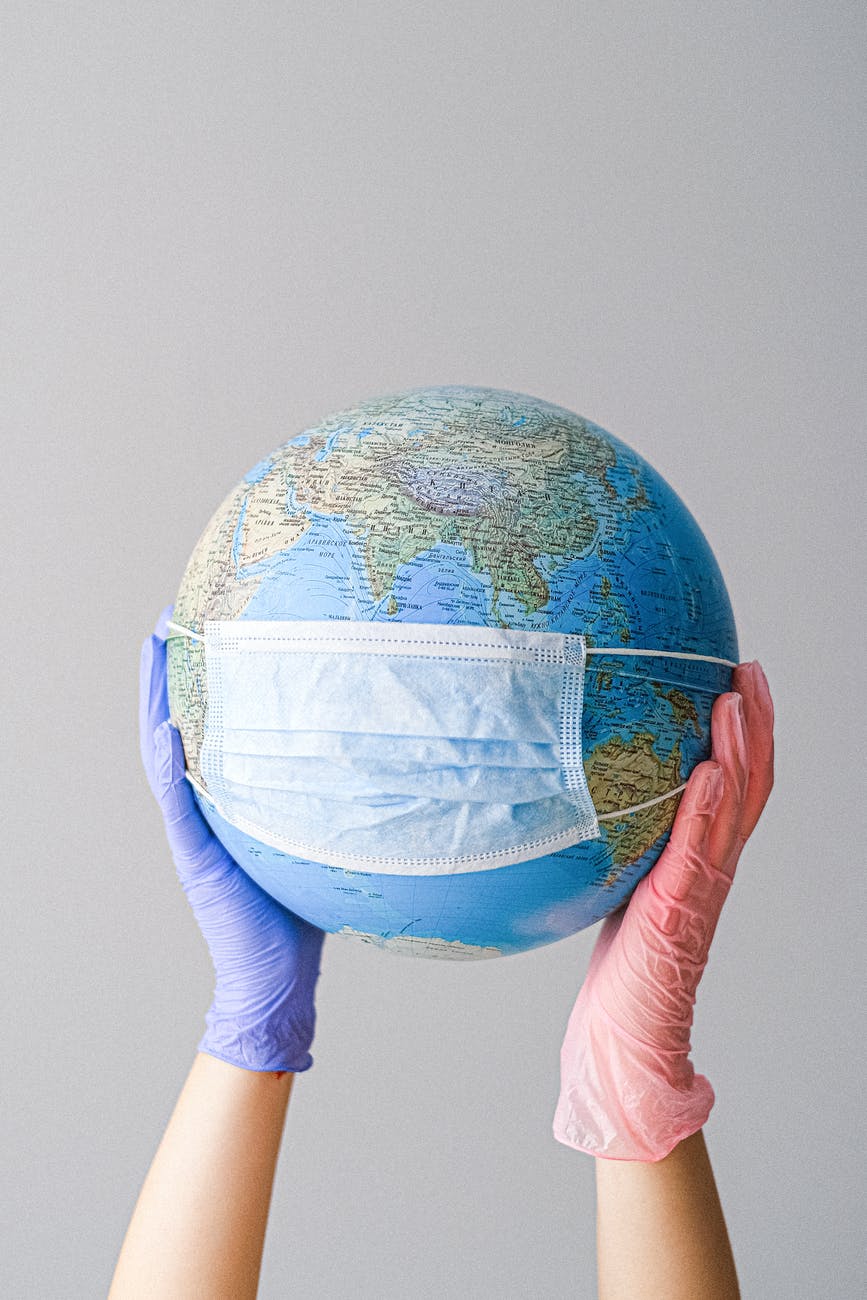
But now, for most, wearing a mask has become a symbol of stress and distress. It symbolises fear and control. We are reliant only on the eyes – there are no cues from mouths or faces. And if someone is wearing glasses (or worse, sunglasses) then the cues come in fragments.

Depending on the state of mind of the onlooker, the expression under the mask might be pursed, angry, sad or a grimace – or a smile, surprise, delight or passive. It’s easy to mispresent or be misrepresented.

We are re-learning the art of body language and it’s not always been clear or easy.

However, (and in an attempt to finish on a positive note) with the most recent mask-wearing comes a sense of understanding, a union of compromise and focus on fixing. A shared experience that, for the most, transcends.